Translate

Showing posts with label Regional Produce. Show all posts

Jul 9, 2017

Your Next Lesson: Madeira

by Eric Asimov, The New York Times

 Image result for madeira wine
Eric Asimov, The New York Times wine critic, talks about Madeira Wine in the following excerpt:

“... Even among fortified, sweet wines, Madeira is singular. For one thing, it is virtually indestructible, made in such a way that the usual enemies of fine wine — heat, light and air — are shrugged off like flecks of dust. It was this invulnerability that gave Madeira the strength to withstand the rigors of ocean voyages and become the most popular wine of colonial America. The popularity of Madeira, which comes from the Portuguese island of the same name, plummeted in the late 19th century with the arrival of phylloxera, a ravenous aphid that ravaged vineyards throughout Europe. The vineyards were replanted after a solution was found, but revolution, wars, the Depression and Prohibition in the 20th century prevented Madeira from regaining its former markets.
Today, in the United States at least, Madeira has experienced a modest revival. But fortified and sweet wines have largely fallen out of favor, so its popularity remains limited. ... The best bottles tend to come from four principal grapes in ascending order from driest to sweetest: sercial, verdelho, bual and malmsey, which is better known elsewhere as malvasia.

... How to serve Madeira? Please, don’t haul out the brandy snifters, just use ordinary wine glasses. The sercial is dry enough to drink with meals. I remember it as an excellent combination with a grilled skirt steak. The malmsey is quite sweet. It goes wonderfully with cheese and chocolate. The bual is somewhere in between: You can try it with savory and sweet. You may not want to drink as much Madeira as you would table wine. It’s 19 percent to 20 percent alcohol, which makes it more suited to ocean voyages than overindulgence.

Feb 6, 2014

Apricot (Prunus Armeniaca)


The apricot, Prunus armeniaca, is a species of Prunus, classified with the plum in the subgenus Prunus. The native range is somewhat uncertain due to its extensive prehistoric cultivation.
The origin of the apricot is disputed. It was known in Armenia during ancient times, and has been cultivated there for so long, it is often thought to have originated there. Its scientific name Prunus armeniaca (Armenian plum) derives from that assumption.
In Europe, apricots were long considered an aphrodisiac, and were used in this context in William Shakespeare's A Midsummer Night's Dream, and as an inducer of childbirth, as depicted in John Webster's The Duchess of Malfi.
Due to their high fiber to volume ratio, dried apricots are sometimes used to relieve constipation or induce diarrhea. Effects can be felt after eating as few as three.


Sep 29, 2013

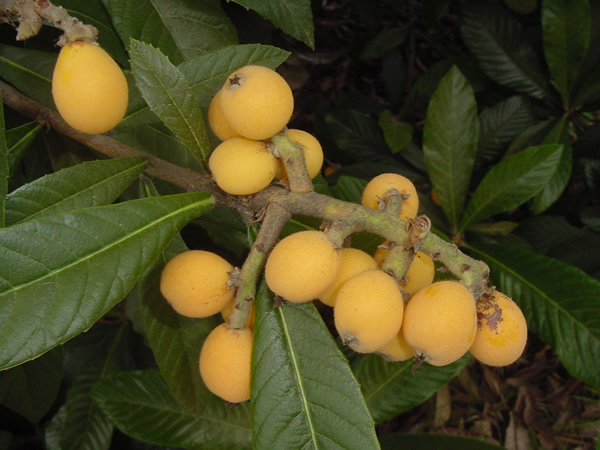
Loquat


Succulent, tangy and sweet, this unique fruit is originated in the mountainous, evergreen rain forest of Southeastern China, from where it spread all across the world, including Japan.
Loquat fruits are rich in vitamins, minerals, and anti-oxidants.
They are very low in calories; provide just 47 calories per 100 g, however, rich in insoluble dietary fiber, pectin. Pectin retains moisture in the colon and thus functions as bulk laxative and by this way, it helps to protect the colon mucous membrane by decreasing exposure time to toxic substances as well as binding to cancer-causing chemicals in the colon.
Pectin has also been shown to reduce blood cholesterol levels by decreasing its re-absorption in the colon by binding bile acids resulting in its excretion from the body.
Loquat fruit is an excellent source of vitamin-A which maintains integrity of mucus membranes, and skin. Lab studies have shown that consumption of natural fruits rich in vitamin-A, and flavonoids helps to protect from lung and oral cavity cancers.
Furthermore, the fruit is also a good source of iron, copper, calcium, manganese, and other minerals.


Jul 5, 2013

Papaya – Fruit of the Angels

Image result for papaya
Though the exact area of origin is unknown, the papaya is believed native to tropical America, perhaps in southern Mexico. Spaniards carried seeds to the Philippines about 1550 and the papaya traveled from there to Malacca and India and soon found its way to Madeira.
The papaya is a melon-like fruit with yellow- orange flesh with dozens of small black seeds enclosed in skin that ranges in color from green to orange. It has high nutritional benefits: rich in anti-oxidants, B vitamins, folate and pantothenic acid, minerals, potassium and magnesium, and fiber. Together, “these nutrients promote the health of the cardiovascular system and also provide protection against colon cancer.” In addition, papaya contains the digestive enzyme, papain, which is used like bromelain, a similar enzyme found in pineapple, to treat sports injuries, other causes of trauma, and allergies. Vitamin C and vitamin A, which is made in the body from the beta-carotene in papaya, are both needed for the proper function of a healthy immune system. Papaya may therefore be a healthy fruit choice for preventing such illnesses as recurrent ear infections, colds and flu.
This highly loved tropical fruit was reputably called “The Fruit of the Angels” by Christopher Columbus.


Jun 30, 2013

The Lemon


Health benefits of lemon include treatment of throat infections, indigestion, constipation, dental problems, fever, hair care, skin care, internal bleeding, rheumatism, burns, overweight, respiratory disorders, cholera and high blood pressure. Known for its therapeutic property since generations, lemon helps to strengthen your immunity system and cleanses your stomach. It is not only a blood purifier but also enables body to fight diseases.
Lemon juice, especially, has several health benefits associated with it. Useful for treating kidney stones, curing heart strokes and reducing the body temperature, lemonade helps you to stay calm and cool. So, remember, ‘a lemon a day may actually keep the doctor away’.


May 10, 2013

Passion Fruit


Common name: Passion Fruit.

Scientific name: Passiflora edulis Sims

Family: Passifloraceae

Distribution and Habitat: Its origin is Brazil and it is cultivated in Madeira because it is a widely appreciated fruit by the island’s inhabitants.

Description: This fruit grows in herbaceous or woody creeping plants that may reach more than 10 m in length; the leaves are green, shiny on the upper part, simple, alternate, ovate, elliptic, lobed or palmate. The hermaphrodite blossoms are of rare beauty; they are white and purple and have an intense perfume. The egg-shaped fruit is purplish, its shell is hard and wrinkled, and the pulp is yellow, juicy and has small black seeds.

Conservation statute and Threats: None

Observations: Blooming season is from April to November.


Nov 10, 2012

Sugarcane


Sugarcane is a plant that grows best in tropical regions due to the tropical climate available. They are rich in sugar and can reach heights of between two to six meters.
It is a plant that grows best in tropical regions. It has become widely cultivated around Madeira Island and tourists who have tried its syrup have given it a thumbs up.
The sugarcane plant is considered one of the most valuable plants in the history of humanity due to its high commercial value and multiple uses. In Madeira, the sugarcane is used to produce various traditional products that are sold around the island and are also sold outside of the island.
The sugarcane plant is collected and its syrup is squeezed out using proper machinery which can be found in any one of the three honey mills located on the island: Calheta, Porto da Cruz, or Ribeiro Seco. 
It is worthy to note that honey is one of the main basic ingredients in the preparation of the traditional cake called ‘Bolo de Mel’ and Madeira’s white-rum lemon juice honey drink - Poncha.