Translate

Showing posts with label Archipelago. Show all posts

Nov 24, 2017

Porto Santo

Image result for porto santo
Porto Santo is the smallest inhabited island of the Madeira Archipelago. It lies in the Atlantic Ocean, at the South-western tip of Europe, about 500 km from the coast of Africa and 1000 km from Continental Europe. The flight from Lisbon to Porto Santo is approximately 1hr 30 minutes.

First discovered in 1418, by Portuguese sailors, this archipelago is formed by the islands of Madeira and Porto Santo as well as the uninhabited Selvagens and Desertas Islands. The friendliness and hospitality of its locals, the mild climate all year around, the spectacular unspoilt landscapes and the richness and variety of the natural, historical and cultural resources are just some of the reasons why you should discover this paradise yourself.
A golden isle, washed by turquoise sea and where peace and quiet reign supreme, is all you need for a truly relaxing holiday.
This Atlantic island boasts 9 km fine golden sands ideal for sunbathing and swimming.
Health and wellness go hand in hand on this magnificent beach thanks to its crystalline water and golden sand, which have unique therapeutic properties. The sand is soft, fine and smooth and consists mainly of calcium carbonate in the form of calcite, which has special thermal qualities.
The primitive beauty of the landscape enchants anyone walking the paths or cycling the island’s trails.

The safety, along with the warm welcome of its locals, the pleasures that nature has to offer, the beautiful beaches of fine sand, and the calm sea currents, turn Porto Santo island into a privileged destination.

May 21, 2017

Islands and islets

Related image

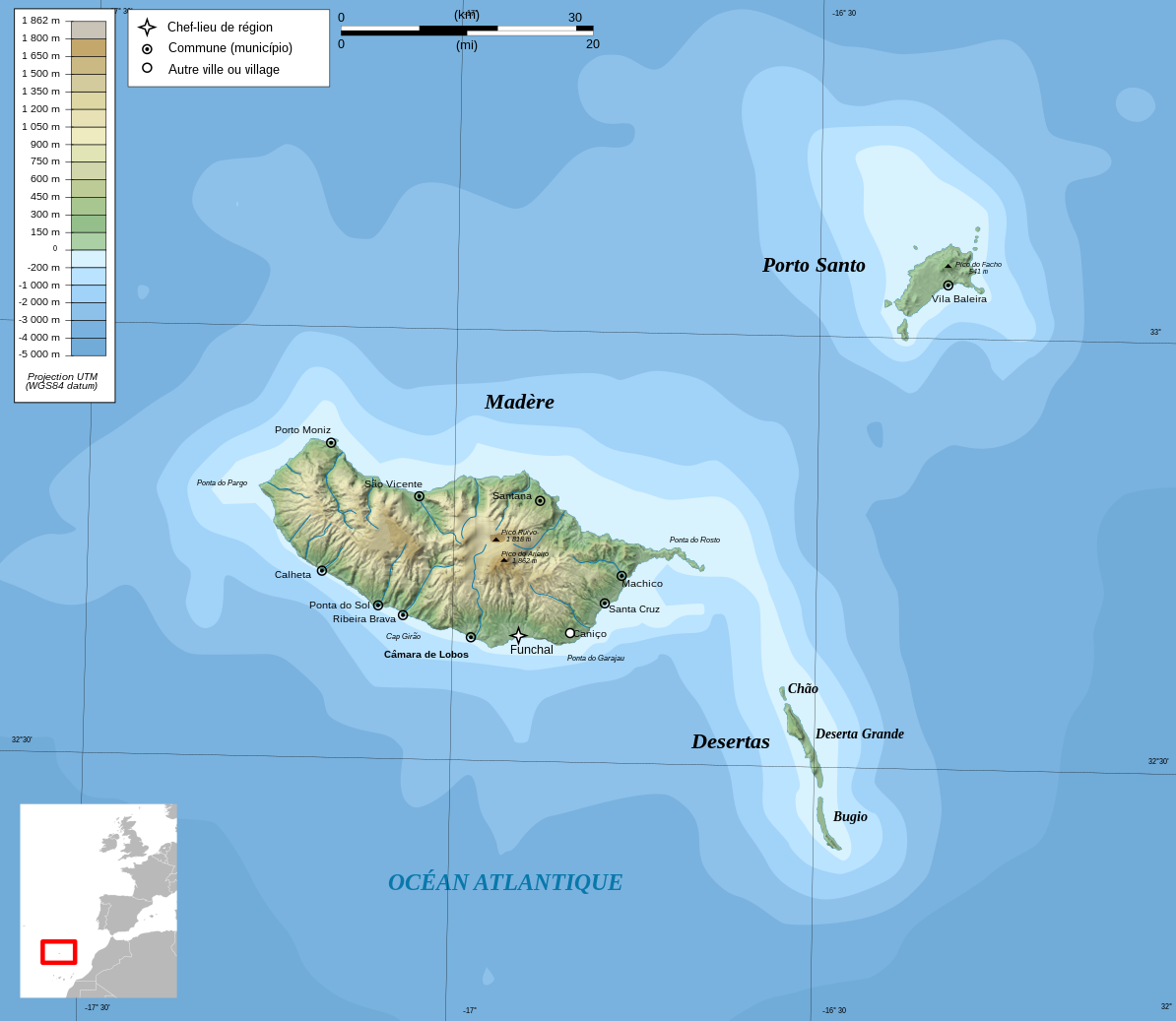
Madeira (740.7 km2), including Ilhéu de Agostinho, Ilhéu de São Lourenço, Ilhéu Mole (northwest); Total population: 262,456 (2011 Census).


Porto Santo (42.5 km2), including Ilhéu de Baixo ou da Cal, Ilhéu de Ferro, Ilhéu das Cenouras, Ilhéu de Fora, Ilhéu de Cima; Total population: 5483 (2011 Census).

Desertas Islands (14.2 km2), including the three uninhabited islands: Deserta Grande IslandBugio Island and Ilhéu de Chão.

Savage Islands (3.6 km2), archipelago 280 km south-southeast of Madeira Island including three main islands and 16 uninhabited islets in two groups: the Northwest Group (Selvagem Grande Island, Ilhéu de Palheiro da Terra, Ilhéu de Palheiro do Mar) and the Southeast Group (Selvagem Pequena Island, Ilhéu Grande, Ilhéu Sul, Ilhéu Pequeno, Ilhéu Fora, Ilhéu Alto, Ilhéu Comprido, Ilhéu Redondo, Ilhéu Norte).

Jan 13, 2017

Desertas (Desert Islands)

Image result for ilhas desertas
The Desertas (Desert Islands), are made up of three long and narrow islands that stretch over a distance of about 22.3 kilometres (13.9 miles), and that are part of the Madeira Archipelago. The islands are located off the coast of Morocco, between Madeira Island and the Canary Islands.
The Desertas are composed of Chão Islet, Deserta Grande, and Bugio.
Administratively, the islands are part of the Municipality of Santa Cruz in Madeira. The islands are a designated Portuguese nature reserve and therefore, a licence is required in order to set foot on any of the islands.
Though close to the main island of Madeira, the geology of the Desertas is starkly different. The high, long, and rocky islands of the group are barren of topsoil, and the only wildlife consists of about sixteen species of birds, including eight species of seabirds, and a scarce population of feral goats, rabbits, and rodents, brought from Portugal by the mariners who first stepped on the rocky shores. Native species of wolf spider, as well as reptiles, also exist in the fragile and arid ecosystem.
Image result for desertas
The only inhabitable island, with its own water source, is Deserta Grande. However, all historical attempts to colonise the island have failed due to the impracticability of communal agriculture. A tiny colony of Mediterranean monk seals inhabit the beaches, and since 1990 the islands have been constituted as a nature reserve for their protection. In 1998 the colony numbered only eight, but today the population numbers approximately twenty seals. Full-time wardens, geologists, and the occasional boaters are the only ones who have visited the Desertas. There are also a few research stations on the islands.

Jan 9, 2017

Savage Islands

Image result for Ilhas Selvagens madeira
Selvagens Islands,(Savage Islands) is a small uninhabitable archipelago in the North Atlantic, roughly midway between Madeira and the Canary Islands. The archipelago comprises two major islands and several islets of varying sizes, that represent the southernmost region of Portugal. The archipelago lies about 230 km (143 mi) from Madeira, is administered by the Portuguese municipality of Funchal.
They are designated a Nature Reserve, comprised of two areas: Selvagem Grande Island and Selvagem Pequena Island. The total land area of the Savage Islands is 2.73 km2 (1.05 sq mi), with little fresh water and surrounded by dangerous reefs (which makes limited access difficult).
The northeast Group - includes the main island of Selvagem Grande and three small islets: Sinho Islet (Portuguese: Ilhéu Sinho), Palheiro do Mar, and Palheiro da Terra.
The southwest Group - including the main island of Selvagem Pequena and Fora Islet (Portuguese: Ilhéu de Fora), it is surrounded by a group of very small islets and a group collectively known as the Northern Islets (Portuguese: Ilhéus do Norte): Alto, Comprido and Redondo.
The islands physical characteristics are consequence of mountain-forming and volcanic forces that occurred between 60 and 70 million years ago. The average annual temperatures range between 17–19 ºC, generally exceeding those in Madeira (defined as a subtropical maritime climate), while sea temperatures remain comfortable all year round.
The scientific and natural interest of this tiny group of islands lies in its marine biodiversity, its unique flora and many avian species that breed annually on its rock cliffs or use them on their stopover on normal migratory patterns. Jacques-Yves Cousteau once said what he believed that around this minor archipelago were "the cleanest waters in the world".
Although there are commercial tours of the islands and their biomes are available, all visitors require special authorization from the Madeira Natural Park, the regional environmental authority.
The Natural Reserve of Selvagens Islands was created as part of the Madeira Natural Park; it is one of the oldest nature reserves of Portugal and it also includes the surrounding shelf to a depth of 200 m. In 1976, permanent surveillance began, and in 1978 the reserve was elevated to the status of Nature Reserve.
Today the Selvagens Islands have a permanent team of wardens from Madeira Natural Park.
The islands were colonized by Portugal and baptized Selvagens in 1438 by the Portuguese mariner Diogo Gomes de Sintra. During the 16th century the Selvagens Islands belonged to a family from Madeira known as Caiados. In 1560 they were inheritated by João Cabral de Noronha.
In 1904 the islands were sold to Luís Rocha Machado.
In 1971 the Portuguese government intervened and acquired the islands, converting them into a Nature Reserve.


Image result for Ilhas Selvagens madeira