Translate

Oct 30, 2020

Welcome

When searching for topics on this website you should ...

1- Consult the left navigation bar entitled 'Topics' which offers you a wide array of categories to choose from. 

2- When you select a category from this menu, you will then be shown a list of relevant topics that you can select for further browsing.

3- Once you reach the end of the page simply click on 'Older Posts' to continue your search for more topics, or click on 'Newer Posts' which will take you back to your original start point.


Should you have any queries or require any further information, please do not hesitate to contact us...

madeiratraveller@gmail.com

Oct 14, 2020

Genesis

Knowledge of the archipelago of Madeira existed much earlier than their formal discovery and settlement.

According to ancient literary artifacts, Plutarch in his Parallel Lives (Sertorius, 75 AD) referring to the military commander Quintus Sertorius (d. 72 BC), relates that after his return to Cádiz, he met sailors who spoke of idyllic Atlantic islands: "The islands are said to be two in number separated by a very narrow strait and lie 10,000 furlongs [2,000 km] from Africa. They are called the Isles of the Blessed." 

Archaeological evidence suggests that the islands may have been visited by the Vikings sometime between 900 and 1030.

In 1418, two captains under service to Prince Henry the NavigatorJoão Gonçalves Zarco and Tristão Vaz Teixeira, were driven off course by a storm to an island they named Porto Santo (English: holy harbour) in gratitude for divine deliverance from a shipwreck. The following year, an organised expedition, under the captaincy of Zarco, Vaz Teixeira, and Bartolomeu Perestrello, traveled to the island to claim it on behalf of the Portuguese Crown. Subsequently, the new settlers observed "a heavy black cloud suspended to the southwest." Their investigation revealed it to be the larger island they called Madeira.


May 23, 2020

Bottlenose Dolphins


 Image result for bottlenose dolphins
Due to its unique location in the mid-ocean, the island of Madeira is blessed with a very special event: the presence of visiting whales and dolphins, which has only recently been recognized as another asset to this beautiful holiday destination.

Bottlenose dolphins are the most common species and can be seen in the waters near Madeira the whole year. The other species you might see (depending on the season) include: Common Dolphin, Striped Dolphin, Pantropical Dolphin, Atlantic Spotted Dolphin, Rough-toothed Dolphin, and and Risso’s Dolphin.

Bottlenose Dolphins are the most common members of the family Delphinidae, the family of oceanic dolphin. These dolphins are marine mammals that live in tropical and temperate oceans around the world. This includes the waters off the UK and Ireland, where you can spot them swimming and playing in bays and river estuaries.

Description

These beautiful creatures have a short thick beak, as their name suggests, and a curved mouth, giving the appearance that they are always smiling.
They weigh an average of 300 kg (660 pounds). It can reach a length of just over 4 metres (13 feet). Its color is usually dark gray on the back and lighter gray on the flanks. Older dolphins sometimes have a few spots.
Although they live underwater, the bottlenose dolphin must come up to the surface to breath air. It breathes through what”s called a “blowhole”, a hole at the top of its head. These clever creatures can open this hole when inhaling and exhaling out of the water, and close it when below the ocean surface. They can hold their breath underwater for around seven minutes.

Food
Being carnivores, these finned creatures eat mostly fish, but will also eat crustaceans such as shrimp and squid.

Skills
Bottlenose dolphins are super swimmers, gliding through the water using their curved dorsal fin on their back, a powerful tail and pointed flippers. They can reach speeds over 30km an hour and dive as deep as 250m below the surface.
These skillful creatures are awesome acrobats, too, and can be seen flipping (or “breaching”) out of the water. In fact, they can launch themselves up to 6 meters (20 feet) out of the water before crashing back down with a splash. There are different theories as to why they do this – it could be to get a better view of things in the distance, clean parasites off their bodies, communicate with other pods or just for good fun.
They can use tools such as “sponging” (using marine sponges to forage for food sources they normally could not access) and transmit cultural knowledge from generation to generation.
They have also been trained by militaries to locate sea mines or detect and mark enemy divers. The deepest dive ever recorded for a bottlenose dolphin was 300 meters (990 feet). This was accomplished by Tuffy, a dolphin trained by the US Navy.
In some areas, they cooperate with local fishermen by driving fish into their nets and eating the fish that escape.

Intelligence
Bottlenose dolphins are considerably intelligent and have driven interaction with humans. Bottlenose dolphins gained popularity from aquarium shows and television programs such as Flipper.
Bottlenose dolphins have the third largest encephalization levels of any mammal on Earth (humans have the largest), sharing close ratios with those of humans and other great apes, which more than likely contributes to their high intelligence and emotional intelligence.

Interaction
Bottlenose dolphins are social creatures that travel in groups, called “pods”, of around 10-15. In these groups they play and hunt together, as well as cooperate to raise young dolphin calves and help each other.

Communication
Bottlenose dolphins are kings of communication. They send each other messages in different ways – they squeak and whistle and also use body language, leaping out of the water, snapping their jaws and even butting heads.
These magnificent mammals also produce high-pitched clicks to help them navigate and find food – a process called “echolocation”. When the clicking sounds hit an object in the water – such as a rock or fish – they bounce back to the dolphin as echoes. From this, the super swimmers can work out the location, size and shape of the object.

Longevity
Bottlenose dolphins can live for more than 40 years. Females typically live 5–10 years longer than males, with some females exceeding 60 years. This extreme age is rare and less than 2% of all Bottlenose dolphins will live longer than 60 years. Nellie, the longest-lived Atlantic bottlenose dolphin in human care, died at age 61 on April 30, 2014. Nellie was born on Feb, 27, 1953 at Marineland.

Predators
Some large shark species, such as the tiger shark, the dusky shark, the great white shark and the bull shark, prey on the bottlenose dolphin, especially calves.
However, the biggest predators that have posed the greatest threat to these
incredible creatures are humans.
Millions of dolphins have either drowned in fishing nets or have been
slaughtered for the meat market. Tuna fishing crews and Japanese hunts have
been the most responsible for the largest number of killings and deaths.

Jul 19, 2019

Surfing in Madeira

Image result for surfing in madeira
courtesy: surfertoday
The northwestern side of Madeira offers two fabulous breaks on your way to the small town of Porto Moniz: Achadas da Cruz and Porta do Tristão. Both spots work well in low tide.
If you're on the north side of the island, and if you're still catching your first waves, head to Fajã da Areia, a surf spot that is often working and delivering waves in the one-to-six-foot range. For point break enthusiasts, there's Ribeira da JanelaContreiras, and Esquerda de S. Vicente.
TOP 10 Surf Spots
Jardim do Mar: Low Tide | Level Intermediate/Advanced
Ponta Pequena: Low Tide | Level Intermediate/Advanced
Paul do Mar: High Tide | Level Intermediate/Advanced
Ponta do Pargo: Low Tide | Level Intermediate/Advanced
Achadas da Cruz: Low/Medium Tide | Level Intermediate
Porta do Tristão: Low Tide | Level Advanced
Ribeira da Janela: Low Tide | Level Intermediate/Advanced
Contreiras: Low Tide | Level Intermediate/Advanced
Esquerda de S. Vicente: Low Tide | Level Intermediate/Advanced
Fajã da Areia: Low/Medium/High Tide | Level Beginner/Intermediate/Advanced

May 18, 2019

Fried Cornmeal (Milho Frito)

Image result for milho frito
Milho Frito is one of the most traditional dishes in Madeiran cuisine. They are deep fried cornmeal based treats filled with kale and other typical seasonings. They have unbelievable flavor and are perfect when being served on their own or typically as a side dish to meat skewers.

Ingredients:
1 cup white corn meal
4 garlic cloves, minced
1 cube chicken broth
4 kale leaves, minced
2 tablespoons olive oil
2 teaspoons salt
4 cups water
Vegetable oil for frying

Directions:
1) In a saucepan on high heat, add the garlic and olive oil.
2) Let it cook for a minute and then add the water, chicken broth, and corn meal. Mix until the corn meal is totally dissolved.
3) Add the salt and kale and stir consistently until the water is boiling.
4) Turn the heat to low and let it cook for about half an hour while stirring occasionally until the cornmeal thickens.
5) Once thickened, pour the mixture into a greased and flat bottomed dish. Let the mixture rest for 2 hours.
6) Now cut the corn meal into squares and begin to fry them in a deep frying pan on high heat with vegetable oil.
7) Fry them a couple at a time until they are golden brown and then once they are done place them on a platter with papers towels to dry.
8) Once they are all done, let them cool for 5 minutes and serve immediately.

Henry Nelson Coleridge


Image result for old books
Nephew, son-in-law and editor of the famous poet Samuel Taylor Coleridge, Henry Nelson Coleridge was born on 25 October 1798 and died on 26 January 1843 at the age of 44. He visited Madeira in 1825, at the age of 26, and summed his trip up by stating, “I should think the situation of Madeira the most enviable on the whole earth. It ensures every European comfort with almost every tropical luxury.” 
His father was Colonel James Coleridge, of Ottery St. Mary. He was born on 25 October 1798. He was educated at Eton and at King's College, Cambridge, of which he became a fellow. In 1825, he accompanied his uncle, William Hart Coleridge, the bishop of Barbados, to the West Indies, and described his excursion in a bright and lively little book, Six Months in the West Indies in 1825, published anonymously in the following year. He wrote therein volubly on emancipation of slaves, which he enumerated at 800,000, and concluded with this declaration of love and devotion upon his return,

“But God bless thee, England, and crown thee with blessings, thou glorious land of my fathers! When I saw the two broad lights on the black Lizard again, my heart swelled with that unconquerable passion which I used to feel on returning from a distant school and sprinting into my dear mother's arms. O my country, I have no pride but that I belong to thee, and can write my name in the muster roll of mankind, an Englishman.”

In 1826, he was called to the bar, and in 1829 married his first cousin Sara, daughter of the poet, of whom he wrote three years earlier during their courtship,

“Now, reader, if you are an Englishman, (for I know nothing about the Scotch and Irish,) think over your own family, your sisters, or perhaps you have a cousin or so, ---. I love a cousin; she is such an exquisite relation, just standing between me and the stranger to my name, drawing upon so many sources of love and tieing them all up with every cord of human affection - almost my sister ere my wife!”

He was the author, as appears from Southey's correspondence, of The Life of Swing, a pamphlet called forth by the rick-burning disturbances of 1830, which went through several editions. In the same year he published an introduction to Homer, the first of a contemplated series on the Greek poets, which was not continued further.
He became Coleridge's literary executor on the death of the latter in 1834, and the short remainder of his life was chiefly devoted to the fulfilment of this trust. Coleridge's Literary Remains, Aids to Reflection, and Confessions of an Inquiring Spirit were edited by him. His most signal service, however, was the preservation of Coleridge's Table Talk, which he had taken down from his lips during a series of years, and of which he published in 1835 'such parts as seem fit for present publication.' How much was withheld we do not know. The work is accompanied by an eloquent preface, vindicating Coleridge's conversation from the charge of obscurity, and his literary character from the charge of plagiarism.
Henry Nelson Coleridge died on 26 January 1843, after long suffering from a spinal complaint. He was lecturer on equity to the Incorporated Law Society, and contributed several articles to the 'Quarterly Review.' He is described as singularly bright and animated when in health, which the general character of his writings tends to confirm. His son Herbert is separately noticed.


Relatives:


Selected Works:

The following works can be read or downloaded for free at Project Gutenberg:

-The Literary Remains of Samuel Taylor Coleridge (4 volumes) 
-Specimens of the table talk of the late Samuel Taylor Coleridge (2 vols)
Text Records:
-Written on the last Leaf of Shakspeare (1820)
-
On Charles Lamb's Poetry (1821)
Publications:
-Poetry of the college magazine (1819)
-Six months in the West Indies in 1825 (1826)
-Introductions to the study of the Greek classic poets. Pt. 1 (1830)
-The life of swing (1830)


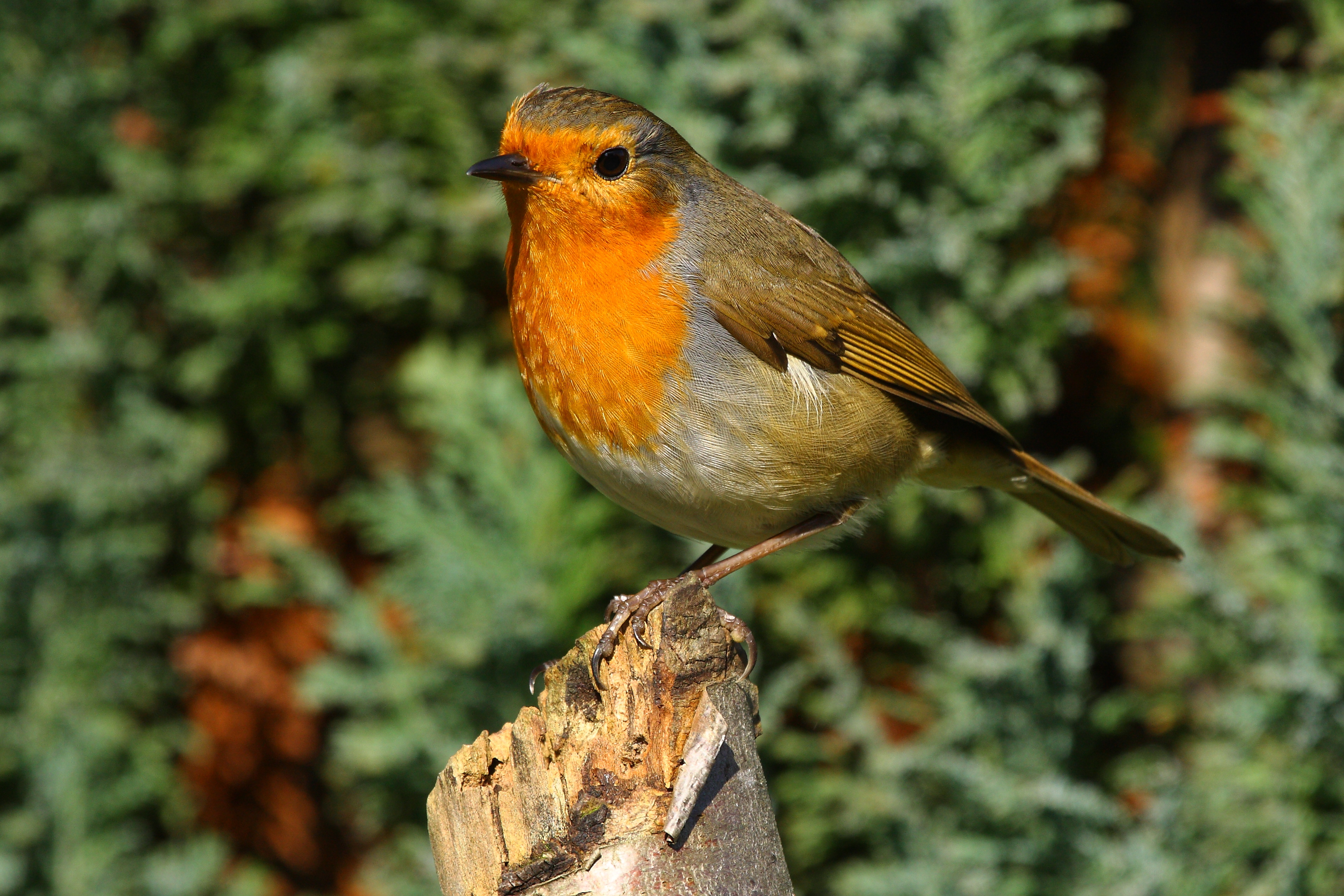
Madeira’s Papinho (Robin Redbreast)


 Image result for erithacus rubecula
Madeirans call it Papinho, others simply refer to it as Robin, or Robin Redbreast in the British Isles. Scientists refer to it as Erithacus rubecula. What is it?
It is a small insectivorouspasserine bird, specifically a chat, considered to be an Old World flycatcher.

Taxonomy ...
The robin belongs to a group of mainly insectivorous birds that have been variously assigned to the thrushes or "flycatchers", depending on how these groups were perceived taxonomically. Eventually, the flycatcher-thrush assemblage was re-analysed and the genus Erithacusassigned to a group of thrush-like true flycatchers, the tribe Saxicolini, that also includes the common nightingale and the Old World chats.

Description ...
The adult European robin is 12.5-14.0 cm (5.0-5.5 in) long and weighs 16-22 g (9/16-13/16 oz), with a wingspan of 20-22 cm (8–9 in). The male and female bear similar plumage; an orange breast and face (more strongly coloured in the otherwise similar British subspecies E. r. melophilus), lined by a bluish grey on the sides of the neck and chest. The upperparts are brownish, or olive-tinged in British birds, and the belly whitish, while the legs and feet are brown. The bill and eyes are black. Juveniles are a spotted brown and white in colouration, with patches of orange gradually appearing.

Distribution & Habitat
The robin occurs in Eurasia east to Western Siberia, south to Algeria and on the Atlantic islands as far west as the Azores and Madeira. Irish and British robins are largely resident but a small minority, usually female, migrate to southern Europe during winter, a few as far as Spain. The robin prefers spruce woods in northern Europe, contrasting with its preference for parks and gardens.

Behaviour & Ecology
The robin is diurnal, although has been reported to be active hunting insects on moonlit nights or near artificial light at night. It is relatively unafraid of people and drawn to human activities involving the digging of soil, in order to look out for earthworms and other food freshly turned up. Indeed, the robin is considered to be a gardener's friend and for various folklore reasons the robin would never be harmed. Robins also approach large wild animals, such as wild boar and other animals which disturb the ground, to look for any food that might be brought to the surface. In autumn and winter, robins will supplement their usual diet of terrestrial invertebrates, such as spiders, worms and insects, with berries and fruit. They will also eat seed mixtures placed on bird-tables.
Because of high mortality in the first year of life, a robin has an average life expectancy of 1.1 years; however, once past its first year it can expect to live longer and one robin has been recorded as reaching 19 years of age. A spell of very low temperatures in winter may also result in significant mortality. This species is parasitised by the moorhen fleaDasypsyllus gallinulae.

Breeding ...
Robins may choose a wide variety of sites for building a nest. In fact, anything which can offer some shelter, like a depression or hole may be considered. As well as the usual crevices, or sheltered banks, other objects include pieces of machinery, barbecues, bicycle handlebars, bristles on upturned brooms, discarded kettles, watering cans, flower pots and even hats. The nest is composed of moss, leaves and grass, with fine grass, hair and feathers for lining. Two or three clutches of five or six eggs are laid throughout the breeding season, which commences in March. The eggs are a cream, buff or white speckled or blotched with reddish-brown colour, often more heavily so at the larger end. When juvenile birds fly from the nests they are mottled brown in colour all over. After two to three months out of the nest, the juvenile bird grows some orange feathers under its chin and over a similar period this patch gradually extends to complete the adult appearance.