Translate

Showing posts with label Museums. Show all posts

Mar 23, 2019

Madeira Toy Museum


Image result for toy museum in madeira

Toys, we have all had that one extra special one we loved and treasured, no matter how bashed and broken it might have become over the years. That lovable doll with tufts of her hair where it’s been styled and styled time and time again, eventually falling out. The toy car that has taken young boys on magical imaginary road trips. The toy soldier that put up a fight with Star Wars creatures as Wampas and Tauntauns. The plastic fighter plane that flew around the living room, but ended up crashing behind couch pillows.
According to Wikipedia, the origin of the word "toy" is unknown, but it is believed that it was first used in the fourteenth century. The oldest known doll toy is thought to be 4,000 years old. Playing with toys is considered to be important when it comes to growing up and learning about the world around us. Younger children use toys to discover their identity, help their bodies grow strong, learn cause and effect, explore relationships, and practice skills they will need as adults. Adults on occasion use toys to form and strengthen social bonds, teach, help in therapy, and to remember and reinforce lessons from their youth.

The Madeira Toy Museum is a toy museum located in the heart of Funchal just behind the Farmer’s Market.
The museum was founded by a local architect, José Manuel Borges Pereira, in 2003.
Currently, the museum has on display 20,000 toys and miniatures from as early as the nineteenth century, which come from Portugal, England, Germany and France.
Miniature cars, dolls, airplanes, toy soldiers, and games are among the many collectibles that give life to this unique museum.
Previously located in a private house, in Barreiros, the museum now has a new home, located in a building dated from the eighteen century, part of the new “Armazém do Mercado”.

Address: Rua Latino Coelho, 39 - 2.º Piso Funchal
Telephone: 291 640 640
Opening hours: Monday to Saturday: 10.00am to 7.00pm
Tickets: Regular:5€    Children: 3€
Family Pack (2 adults + 2 children): 12€
Special prices for schools (require prior-registration)

Sep 23, 2017

The Madeira Optics Museum

Related image
The Madeira Optics Museum - also known as Museu de Óptica da Madeira - is a specialized museum located in FunchalMadeira Island that showcases a permanent collection of optics related devices. The museum has a small antique shop at the entrance, where the visitor may by optics related devices.

The Collectors
A dream of two collectors – a father and a son – comes to life.
In the 1960’s, the passion for engineering and history lead one person, Rui Aguilar, to start acquiring optical devices. Initially, without a defined purpose, the collection kept growing.
Forty years later, a massive 2000 piece optical device collection was stored in a garage. The interest in the collection passed on to his son, Sergio Aguilar, who spent his time rediscovering these antiques from old storage boxes.
With objects ranging from the 17th Century until late 20th Century, every optical device had some sort of significance in the collection. It became more than obvious that the collection had to be shared.
When the idea of the museum popped up in 2014, there was an unstoppable effort of cataloging and organizing the collection, as well as a considerable increase in the amount of objects that were added.

The Collection
The collection includes:
Telescopes (about 50), with emphasis on:
  • One of the oldest (18th Century) metal mirror Newtonian telescope
  • The biggest (14 inch handmade dobsonian)
  • A 14″ Meade Schmidt-Cassegrain, the most advanced in Madeira Island.
Binoculars (over 400), most notably:
  • Galilean binoculars
  • Keplerian with erecting lenses
  • Prismatic with “roof” prisms
  • Prismatic with “porro” prisms
Film cameras and projectors (around 150)
  • 35mm, 16mm, 9.5mm, Super8 and 8mm formats
Photographic cameras (about 650), notably:
  • Plate cameras from the end of the XIX century.
  • Twin Lens Reflex (TLR) Cameras such as Rolleiflex, Yashica and Minolta
  • Single Lens Reflex (SLR) Cameras such as Nikon, Canon, Pentax
  • Folding Cameras
  • Instant cameras (from first to last)
  • Box Cameras
  • Rangefinder cameras such as Leica
  • Micro cameras (HIT, Arrow, Mycro and similar)
  • “System” cameras such as Hasselblad, Mamiya and Fuji.
Medical related optical devices like
  • Phoropters
  • Lensmeters
  • Ophthalmoscopes
Biology area optical devices like binocular and monocular microscopes and accessories
  • Antique and modern monocular microscopes
  • Antique and modern binocular (mono and stereo) microscopes
  • Preparations and other accessories
Army equipment
  • Night vision goggles
  • Heavy duty rangefinders and periscopes from armored vehicles
  • Aiming scopes
Topography equipment
  • Theodolites
  • Dumpy levels

Location:
The Madeira Optics Museum is located in Funchal, just 5 minutes from the City Hall.
Entrance Fees:
Adults: 5€
Young (10-17 years inc.): 3€
Crianças (up to 9 years inc.): Free
Schedule:
Weekdays: 10:00-12:30, 13:30-17:30
Saturdays: 10:00-13:00
Sundays and Public Holidays: Call to Schedule
Address:
Rua das Pretas, 51
9000-049 Funchal
00 351 961822358
00 351 291220694

Jan 2, 2017

Museu Mary Jane Wilson

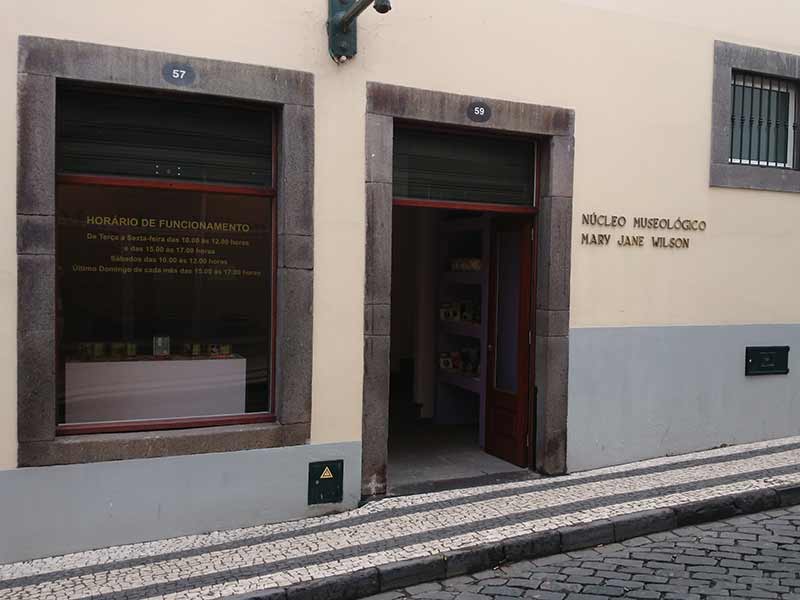
The Mary Jane Wilson Museum is a small museum, consisting of five rooms, which attempts to present the life and work of Sister Mary Jane Wilson (1840-1916), founder of the Congregation of the Franciscan Sisters of Our Lady of Victories and various educational institutions, religious and meritorious in Madeira Island.

The first room is dedicated to the life and work of Sister Mary Jane Wilson.

A second area is a prayer hall, dedicated to her conversion to Catholicism. The third and fourth rooms are dedicated to the development of her work as a nurse and founder of social and charitable works, including when the outbreak of smallpox occurred in Madeira in 1906.

In the last room it is presented an estimated reconstruction of a room with a collection of drawings of English landscapes made by her in the 50s of the nineteenth century, and Mary Jane Wilson’s personal objects, as testimony to her life.

Address: 
Rua do Carmo, 59 -61
9050-019 Funchal

Telephone: 
(351)291 225 492
Fax: 
(351)291 225 492

E-mail: 


Opening hours:
Tuesday to Friday: from 10.00 a.m. to 12.00 p.m. and from 3.00 p.m. to 5.00 p.m.
Saturday: from 10.00 a.m. to 1.00 p.m.
Last Sunday of each month: from 10.00 p.m. to 1.00 p.m.
Closed on Mondays and Holidays.

Tickets:
Free admission


Feb 6, 2014

CR7 Museum

Image result for cr7 museum
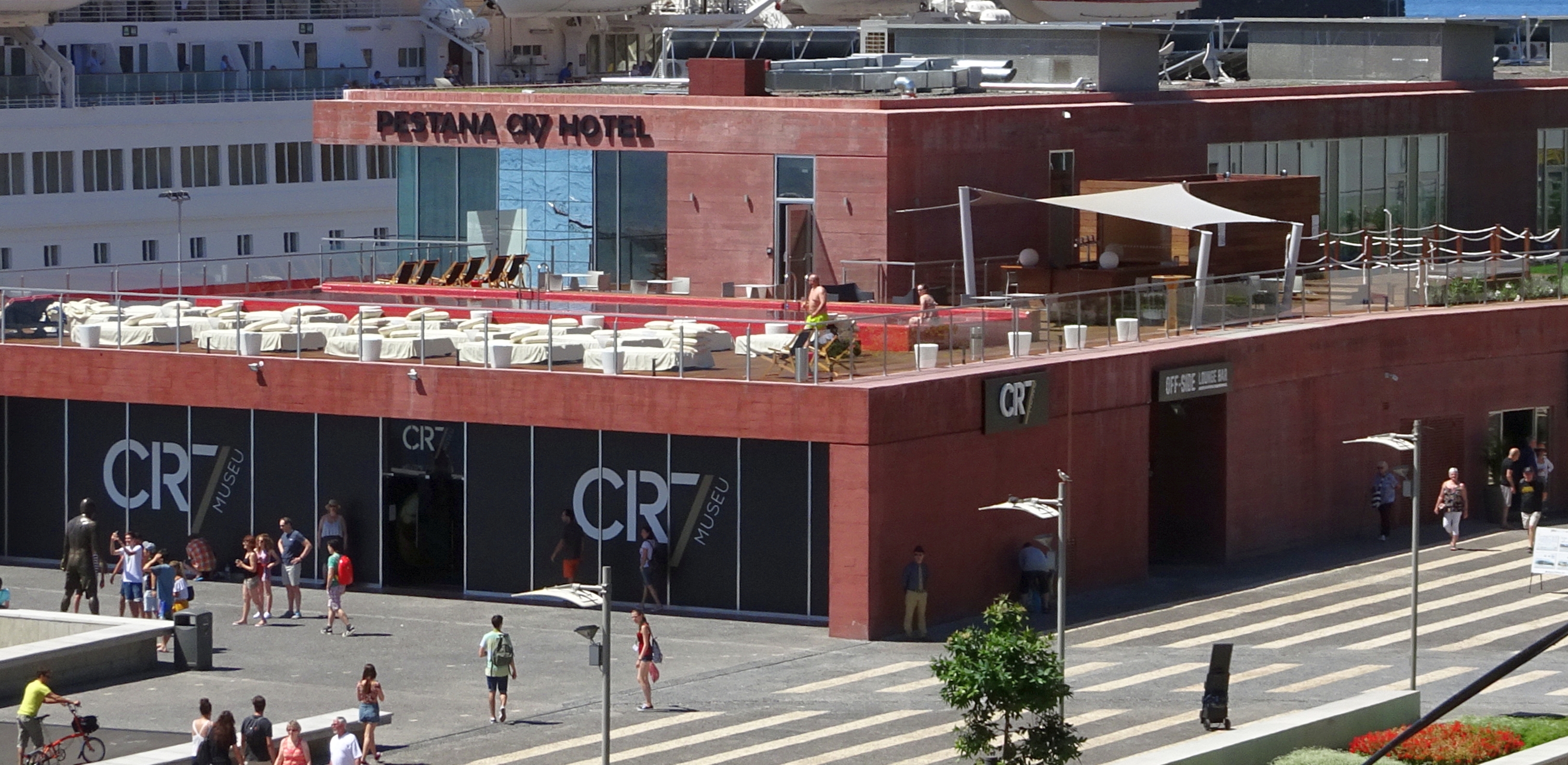
The museum portrays the life story of the Madeiran football player Cristiano Ronaldo and displays the trophies won by the Portuguese international throughout his brilliant career. The CR7 Museum tells the story of the Portuguese footballer Cristiano Ronaldo and houses all of his individual and team trophies, a total of 126 trophies won. The museum opened to public on December 15th, 2013, and has an area of 400 square metres. The floor is L-shaped and was paved with traditional Portuguese cobblestones and decorated with the CR7 symbol. On your visit, you can see iconic photographs of his career, videos and a replica of his wax statue. All the youth and professional trophies that he won playing for Andorinha, Nacional, Sporting, Manchester United and Real Madrid are on display in the museum. The four major attractions at this museum are: the 2008 and 2013 “Ballons d’Or” and the two Golden Boots (2007/08 and 2010/11).


IBTAM - Institute for Embroidery, Tapestry, Handicrafts of Madeira


Image result for ibtam
The Núcleo Museológico do IBTAM - the museum centre of the Madeiran Institute for embroidery, tapestry and handicrafts is a non-pompous and discreet look at the role and economy of three areas of handiwork still practised today in Madeira: that is, embroidery, tapestry, and handicraft work - especially wickerwork. The centrepiece of the museum is the collection of valuable 19th and early 20th century embroidered cloths and decorative pieces. The collection is reminiscent of the décor that was practised in the homes of fine Madeiran families and abroad during the times when the romanticism style was very much in Fashion.
The craft of embroidering these magnificent cloths is a painstaking one. However, the IBTAM institute have made it less than painstaking to appreciate the history and methods of this elegant craft. A pedagogical centre is open to the public where they can learn the different types of stitches and creative pattern making methods possible in Madeira embroidery.

Opening Hours :
Mondays to Fridays
Open from 10H00 to 12H30 and from 14H30 to 17H30

Closed on Saturdays, Sundays and Public Holidays
Contact:
Núcleo Museológico do I.B.T.A.M.
Rua do Anadia, 44
9050 Funchal
Madeira
Tel: (+351 +91) 22 31 41
Fax: (+351 +91) 22 84 05


Sep 28, 2013

Contemporary Art Museum of Funchal

Image result for Contemporary Art Museum of Funchal

The Contemporary Art Museum of Funchal was opened to the public in 1992 in its new home, the Fortaleza São Tiago, or Fort Saint James, in the old zone - Zona Velha, of Funchal, Madeira. The museum or exhibition is considered to be one of the top 5 art museums in Portugal. The collection of contemporary art is unique in that much of the acquisitions are indeed donations by the artists themselves. Some paintings are bought. But again these are usually purchased at a token fee to the original artist or owner.
The uniquely Portuguese and Madeiran art heritage is continuously expanding and growing to such proportions making it necessary to rotate the collection at various intervals so as to accommodate all the works of art held by the museum in the small confines of the old fort. The museum continues to promote the artists by allowing several artists to exhibit private collections to the public at several opportune times during the year.
Among some of the artists in regular exposition are António Areal, Helena Almeida, Nuno Siqueira, Manuel Babtista, Jorge Martins, Artur Rosa, and Joaquim Rodrigo - artists from the decade of the 60's. More recent artists from the 70's and 80's include Bartolomeu Cid dos Santos, Gil Teixeira Lopes, António Bouca, Cargaleiro, Emília Nadal, Carlos Calvet, António Palolo, Nuno Sampayo, Isabel Laginhas, and many others. The most recent acquisitions of artists that have produced notable works of art in the 90's include Ilda David, Ana Vidigal, Miguel Branco, Pedro Babrito Reis, Sofia Areal, Rui Sanches and António Campos Rosado among many others. For those culture vultures who are Portuguese Art enthusiasts there is even a precious oil by Vieira da Silva.

Monday to Saturday from 10:00 to 12:30 & from 14:00 to 17:30
Rua do Portão de Sã Tiago – Funchal    
Tel.: 291 213 340

May 28, 2013

Natural History Museum

Image result for natural history museum funchal
The Natural History Museum is the oldest museum in operation in the archipelago of Madeira. It is installed in the Palace of St. Pedro, Funchal, one of the most significant buildings of Portuguese architecture of the mid-eighteenth  century. Originally owned by the Counts of Carvalhal it was later sold, in 1929,  to the city of Funchal.
The museum features a great collection of Madeira’s natural history including fish species, birds, land mammals, marine reptiles, insects and other invertebrates, rocks and minerals of the archipelago, as well as marine fossils. There is also a library and a small salt-water aquarium with live specimens located on the first floor.

Morada:
Rua da Mouraria # 31, 9004-546 Funchal
Tel.: +351 291229761
Fax: +351 291225180
Email to book visits: ciencia.visitas@cm-funchal.pt

Timetable:
Tuesday to Friday from 10:00 to 18:00 and Saturday, Sunday and Statutory Holidays from 12:00 to 18:00
Closed: Monday and the following holidays: January 1st, Carnival (Tuesday), Easter (Sunday), May 1st, August 21st, December 25th and 26th

Fee:
Adult: €3,78
Retired/Children from 11 to 17 years of age: €1,78
Youth Card/Children until 10 years of age: Free
Sunday and Holidays – Free


May 24, 2013

The Ethnographic Museum

Image result for ethnographic museum madeira
After some work to rehabilitate and transform the former Manor and Sugar-Mill, the Museu Etnográfico da Madeira was installed there by decision of the Regional Government, having been inaugurated in 1996.
The focus of the Museum is on research, documentation, conservation and dissemination of the testimonies of traditional Madeiran culture.
The Museum includes collections which encompass various social, economic and cultural aspects of the archipelago of Madeira, with ethnography being its main objective. The permanent exhibition area has been organised by themes: production activities (fishing, wine, cereal and linen production cycles), transport, household units (kitchen and bedroom) and traditional trade (grocer's).
The main nuclei of the collection to be found are: equipment used at home, agricultural implements, crafts, cyclical festivities, musical instruments, entertainment activities, costumes, coupling systems, ceramic technology, clay figures and textile technology.
The Museum also renders educational services to the general public especially children, senior citizens and the handicapped.
The Museum also houses its own store which sells and distributes informative material about the Museum such as guide books and postcards.
It also sells traditional craftwork from Madeira.

Opening hours:
Tuesday-Friday: 09:30-17:00; Weekends: 10:00 - 12:30 / 13:30-17:30
Closed:
Monday & Statutory Holidays


May 10, 2013

Quinta das Cruzes

Image result for quinta das cruzes
Quinta das Cruzes is one of the estates with the greatest historic tradition in Funchal, connected with the family of the first donatory captains who carried out works at the end of the 15th century. A small construction started by João Gonçalves Zarco (1425-1467), was extended by his son João Gonçalves da Câmara. It remained in the Câmara family until the mid-17th century moving through matrimonial alliances, to the Lomelino family, by the end of the 19th century.
Today Quinta das Cruzes has been harmonised by major works carried out in the 18th and 19th centuries. Like many of the old Madeiran estates, it has a chapel, a summer house where leisurely afternoons were spent looking out at the sea.
The Museu Quinta das Cruzes opened to the public in 1953, bringing together the original collection of decorative arts by César Filipe Gomes, a Madeiran collector. During its history it was enriched by other donations such as that of João Wetzler, of essentially European silver from the 17th to the 19th centuries. As an open collection of Portuguese and European decorative arts, it has been augmented by various donations and acquisitions until today.
Also worthy of special mention are the so-called Chippendale furniture pieces, a notable collection of paintings, drawings, water colours and engravings, a collection of Portuguese and European jewellery, cameos, ceramics, porcelain, and clay figures.
Walking through the garden, one is left breathless by typical Madeiran stone paths surrounded by flower beds and fountains as well as frescos from the mid-18th century.

Open from Tuesday to Sunday from 10:00 to 12:30 and 14:00 to 17:30.
Closed on Mondays and holidays.

Nov 10, 2012

City of Sugar Museum

Image result for museu do açucar
The Museum “A Cidade do Açúcar” (The City of Sugar), was established by the City Hall of Funchal and opened its doors to the public on October 12th 1996. It is located at Columbus Square, between the streets “Rua do Sabão” and “Rua João Esmeraldo”, in the city’s historic center.
It is dedicated to the island’s sugar industry, which was rather active during the “White Gold Era”, a period between the fifteenth and nineteenth centuries, and which became known as one of the greatest times of the history and culture of Madeira Island.
The collection at the museum gathers archaeological finds from the excavations carried out at the Columbus Square in 1989, where the old houses of the Flemish merchant João Esmeraldo once existed, having been demolished in 1876.
Incredible fortunes were amassed by the early settlers and developers of the island that involved themselves with the sugar trade. The wealth created by these merchants helped build the physical structure of the island.
One such edifice of Funchal was the residence and home of "João Esmeraldo" - a Flemish settler that traded in sugar between Madeira and other parts of Europe. (The site of the current museum under discussion). The building was demolished in 1877. However, under the auspices of the city council efforts were made in 1989 to uncover the foundations of the building still recoverable. The museum holds an impressive collection of objects including tools, conical sugar moulds, sculpture, jewelry and furniture.

General data:
Museu A Cidade do Açúcar
Praça Colombo  5 
9000- 051 Funchal
Telephone: 291 236 910
Monday to Friday from 09:30 to 17:30
Closed on Weekends and Statutory Holidays
email: museu.acucar@cm-funchal.pt

Tickets:
Normal - 3,86€
Persons over 65 and between 11 and 17 years of age - 1,86€
Educational services - FREE