Translate

Showing posts with label Fauna. Show all posts

May 23, 2020

Bottlenose Dolphins


 Image result for bottlenose dolphins
Due to its unique location in the mid-ocean, the island of Madeira is blessed with a very special event: the presence of visiting whales and dolphins, which has only recently been recognized as another asset to this beautiful holiday destination.

Bottlenose dolphins are the most common species and can be seen in the waters near Madeira the whole year. The other species you might see (depending on the season) include: Common Dolphin, Striped Dolphin, Pantropical Dolphin, Atlantic Spotted Dolphin, Rough-toothed Dolphin, and and Risso’s Dolphin.

Bottlenose Dolphins are the most common members of the family Delphinidae, the family of oceanic dolphin. These dolphins are marine mammals that live in tropical and temperate oceans around the world. This includes the waters off the UK and Ireland, where you can spot them swimming and playing in bays and river estuaries.

Description

These beautiful creatures have a short thick beak, as their name suggests, and a curved mouth, giving the appearance that they are always smiling.
They weigh an average of 300 kg (660 pounds). It can reach a length of just over 4 metres (13 feet). Its color is usually dark gray on the back and lighter gray on the flanks. Older dolphins sometimes have a few spots.
Although they live underwater, the bottlenose dolphin must come up to the surface to breath air. It breathes through what”s called a “blowhole”, a hole at the top of its head. These clever creatures can open this hole when inhaling and exhaling out of the water, and close it when below the ocean surface. They can hold their breath underwater for around seven minutes.

Food
Being carnivores, these finned creatures eat mostly fish, but will also eat crustaceans such as shrimp and squid.

Skills
Bottlenose dolphins are super swimmers, gliding through the water using their curved dorsal fin on their back, a powerful tail and pointed flippers. They can reach speeds over 30km an hour and dive as deep as 250m below the surface.
These skillful creatures are awesome acrobats, too, and can be seen flipping (or “breaching”) out of the water. In fact, they can launch themselves up to 6 meters (20 feet) out of the water before crashing back down with a splash. There are different theories as to why they do this – it could be to get a better view of things in the distance, clean parasites off their bodies, communicate with other pods or just for good fun.
They can use tools such as “sponging” (using marine sponges to forage for food sources they normally could not access) and transmit cultural knowledge from generation to generation.
They have also been trained by militaries to locate sea mines or detect and mark enemy divers. The deepest dive ever recorded for a bottlenose dolphin was 300 meters (990 feet). This was accomplished by Tuffy, a dolphin trained by the US Navy.
In some areas, they cooperate with local fishermen by driving fish into their nets and eating the fish that escape.

Intelligence
Bottlenose dolphins are considerably intelligent and have driven interaction with humans. Bottlenose dolphins gained popularity from aquarium shows and television programs such as Flipper.
Bottlenose dolphins have the third largest encephalization levels of any mammal on Earth (humans have the largest), sharing close ratios with those of humans and other great apes, which more than likely contributes to their high intelligence and emotional intelligence.

Interaction
Bottlenose dolphins are social creatures that travel in groups, called “pods”, of around 10-15. In these groups they play and hunt together, as well as cooperate to raise young dolphin calves and help each other.

Communication
Bottlenose dolphins are kings of communication. They send each other messages in different ways – they squeak and whistle and also use body language, leaping out of the water, snapping their jaws and even butting heads.
These magnificent mammals also produce high-pitched clicks to help them navigate and find food – a process called “echolocation”. When the clicking sounds hit an object in the water – such as a rock or fish – they bounce back to the dolphin as echoes. From this, the super swimmers can work out the location, size and shape of the object.

Longevity
Bottlenose dolphins can live for more than 40 years. Females typically live 5–10 years longer than males, with some females exceeding 60 years. This extreme age is rare and less than 2% of all Bottlenose dolphins will live longer than 60 years. Nellie, the longest-lived Atlantic bottlenose dolphin in human care, died at age 61 on April 30, 2014. Nellie was born on Feb, 27, 1953 at Marineland.

Predators
Some large shark species, such as the tiger shark, the dusky shark, the great white shark and the bull shark, prey on the bottlenose dolphin, especially calves.
However, the biggest predators that have posed the greatest threat to these
incredible creatures are humans.
Millions of dolphins have either drowned in fishing nets or have been
slaughtered for the meat market. Tuna fishing crews and Japanese hunts have
been the most responsible for the largest number of killings and deaths.

May 18, 2019

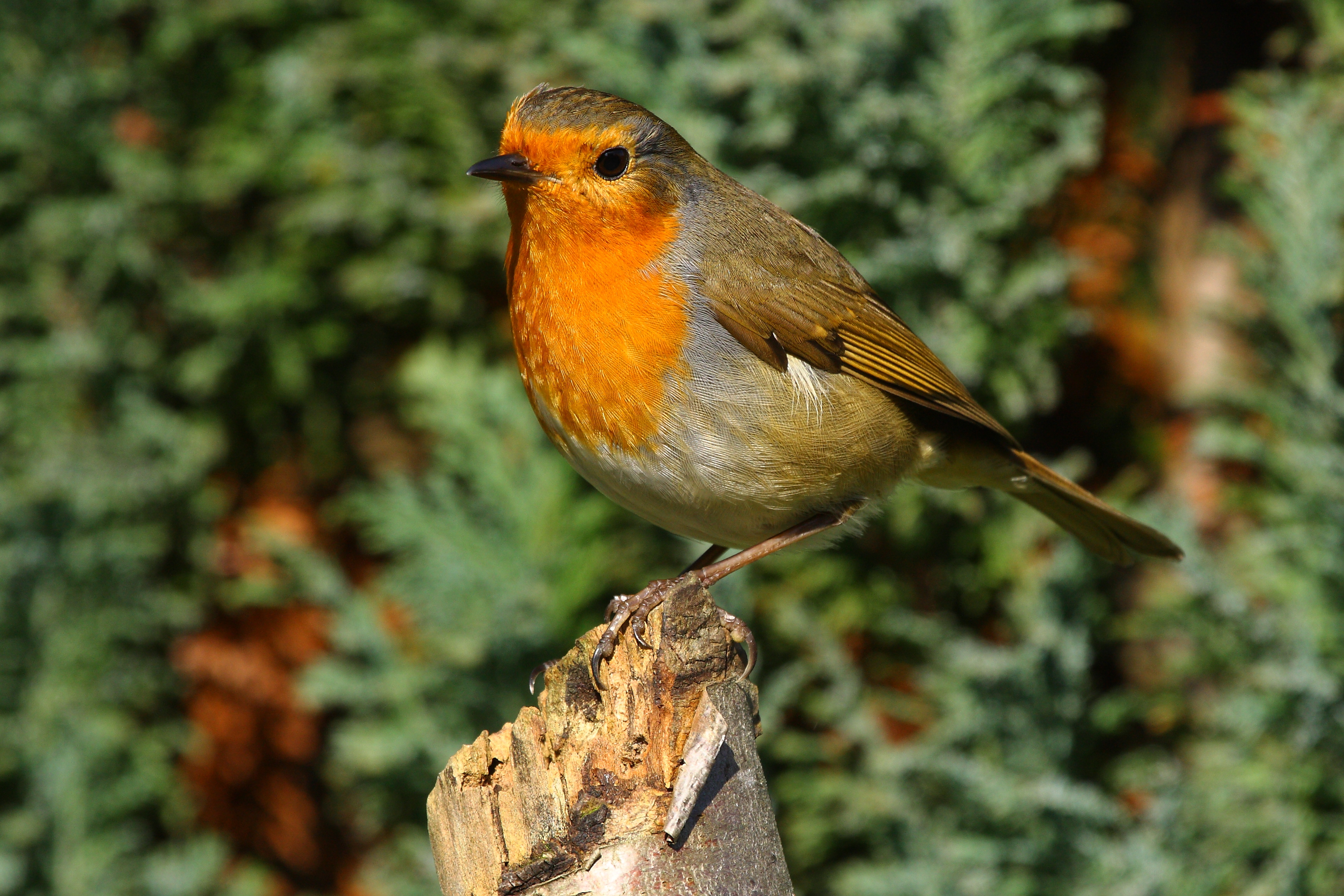
Madeira’s Papinho (Robin Redbreast)


 Image result for erithacus rubecula
Madeirans call it Papinho, others simply refer to it as Robin, or Robin Redbreast in the British Isles. Scientists refer to it as Erithacus rubecula. What is it?
It is a small insectivorouspasserine bird, specifically a chat, considered to be an Old World flycatcher.

Taxonomy ...
The robin belongs to a group of mainly insectivorous birds that have been variously assigned to the thrushes or "flycatchers", depending on how these groups were perceived taxonomically. Eventually, the flycatcher-thrush assemblage was re-analysed and the genus Erithacusassigned to a group of thrush-like true flycatchers, the tribe Saxicolini, that also includes the common nightingale and the Old World chats.

Description ...
The adult European robin is 12.5-14.0 cm (5.0-5.5 in) long and weighs 16-22 g (9/16-13/16 oz), with a wingspan of 20-22 cm (8–9 in). The male and female bear similar plumage; an orange breast and face (more strongly coloured in the otherwise similar British subspecies E. r. melophilus), lined by a bluish grey on the sides of the neck and chest. The upperparts are brownish, or olive-tinged in British birds, and the belly whitish, while the legs and feet are brown. The bill and eyes are black. Juveniles are a spotted brown and white in colouration, with patches of orange gradually appearing.

Distribution & Habitat
The robin occurs in Eurasia east to Western Siberia, south to Algeria and on the Atlantic islands as far west as the Azores and Madeira. Irish and British robins are largely resident but a small minority, usually female, migrate to southern Europe during winter, a few as far as Spain. The robin prefers spruce woods in northern Europe, contrasting with its preference for parks and gardens.

Behaviour & Ecology
The robin is diurnal, although has been reported to be active hunting insects on moonlit nights or near artificial light at night. It is relatively unafraid of people and drawn to human activities involving the digging of soil, in order to look out for earthworms and other food freshly turned up. Indeed, the robin is considered to be a gardener's friend and for various folklore reasons the robin would never be harmed. Robins also approach large wild animals, such as wild boar and other animals which disturb the ground, to look for any food that might be brought to the surface. In autumn and winter, robins will supplement their usual diet of terrestrial invertebrates, such as spiders, worms and insects, with berries and fruit. They will also eat seed mixtures placed on bird-tables.
Because of high mortality in the first year of life, a robin has an average life expectancy of 1.1 years; however, once past its first year it can expect to live longer and one robin has been recorded as reaching 19 years of age. A spell of very low temperatures in winter may also result in significant mortality. This species is parasitised by the moorhen fleaDasypsyllus gallinulae.

Breeding ...
Robins may choose a wide variety of sites for building a nest. In fact, anything which can offer some shelter, like a depression or hole may be considered. As well as the usual crevices, or sheltered banks, other objects include pieces of machinery, barbecues, bicycle handlebars, bristles on upturned brooms, discarded kettles, watering cans, flower pots and even hats. The nest is composed of moss, leaves and grass, with fine grass, hair and feathers for lining. Two or three clutches of five or six eggs are laid throughout the breeding season, which commences in March. The eggs are a cream, buff or white speckled or blotched with reddish-brown colour, often more heavily so at the larger end. When juvenile birds fly from the nests they are mottled brown in colour all over. After two to three months out of the nest, the juvenile bird grows some orange feathers under its chin and over a similar period this patch gradually extends to complete the adult appearance.


Nov 26, 2017

The Eurasian Woodcock

Image result for eurasian woodcock

In the higher areas of Laurisilva forest, where large trees begin to give way to moors, the Eurasian woodcock (Scolopax rusticola) also appears. This bird is very discreet and often goes unnoticed by visitors.
The Eurasian woodcock is a medium-small wading bird found in temperate and subarctic Eurasia. It has cryptic camouflage to suit its woodland habitat, with reddish-brown upperparts and buff-coloured underparts. Its eyes are set far back on its head to give it 360-degree vision and it probes in the ground for food with its long, sensitive bill, making it vulnerable to cold weather when the ground remains frozen.
The male performs a courtship flight known as 'roding' at dusk in spring. When threatened, the female can carry chicks between her legs, in her claws or on her back while flying, though this is rarely witnessed. The world population is estimated to be 14 million to 16 million birds.
The Eurasian woodcock has cryptic camouflage to suit its woodland habitat, with intricately patterned reddish-brown upperparts and buff underparts. The head is barred with black, not striped like that of its close relatives, the snipe. It has large eyes located high on the sides of its head, giving it 360-degree monocular vision.
The wings are rounded and the base of the bill is flesh-coloured with a dark tip. The legs vary from grey to pinkish. The species is sexually dimorphic, with the male much larger than the female, although the sexes cannot be separated in the field.
The most important threat to the population of the Eurasian woodcock in the breeding range is the increased fragmentation of its woodland habitat. At other times of year, a reduction in the amount of permanent grassland and an increase in the intensification of farming are also threats, and the species' susceptibility to avian influenza may have an impact in future.
The Eurasian woodcock's required breeding habitat is large, unfragmented areas of broadleaved deciduous or mixed broadleaved and coniferous forest, with dense undergrowth of plants such as brambleshollyhazelgorsebracken or bilberry. Breeding territories must include a mix of dry, warm resting places, damp areas for feeding, and clearings for flight. In larger woods, wide 'rides' (open tracks through the wood) and small clearings are important. In winter, Eurasian woodcock also use scrubland during the day but in freezing weather they may use intertidal mud.
Eurasian woodcock forage in soft soil in thickets, usually well hidden from sight. They mainly eat earthworms, but also insects and their larvae, freshwater molluscs and some plant seeds.

In William Shakespeare's play Love's Labours Lost, Berowne describes himself and his friends as 'four woodcocks in a dish', after discovering they have all fallen in love when they have sworn not to.

Sep 18, 2017

Madeiran Chaffinch

Image result for Madeiran chaffinch

The Madeiran chaffinch (Fringilla coelebs maderensis) is a small passerine bird in the finch family Fringillidae. It is a subspecies of the common chaffinch that is endemic to the Portuguese island of Madeira, part of Macaronesia in the North Atlantic Ocean. It is locally known as the tentilhão.

Description

The male is more brightly coloured than the female. It has a pinkish breast, bluish-grey cap and greenish-brown back. The female's colouring is more subdued with a cream breast and brownish back, but both sexes have prominent white wing-bars and tail-sides. The length is 14.5–16 cm (5.7–6.3 in).


Breeding

The Madeiran chaffinch nests between April and July. The female builds a cup-shaped nest lined with feathers in which she lays a clutch of four or five eggs and which she alone incubates for 12–15 days before they hatch. The male helps to feed the chicks.


Behavior

A typical bird for picnic tables in forestry areas in Madeira where it is normally tame. Its flight is direct, quite quick and undulating. During the flight it momentarily glides with wings closed.


Habitat

This endemic subspecies of the European Chaffinch is only found in Madeira island, at rather high altitude, being absent from the other islands in the archipelago.
Madeiran Chaffinch is found mainly in woodlands, both indigenous and introduced forests. In the winter it is also found in cultivated areas, near rural housing.

Distinction from similar species

This passerine is very distinct from other with only the female Brambling having some similarity with the female Chaffinch though the first one has an all dark tail and less white on the wings.
Wingspan: 25 - 28 cm (Hume, 2002)

Total length: 14.5 cm (Beaman & Madge, 2011)

Weight: 19 - 23 g (Hume, 2002)

Seasonality in Madeira: All year

Diet: Takes seeds, shoots and berries from trees but also some caterpillar and other insects from foliage.

Curiosities
There are five endemic subspecies of Common Chaffinch in Macaronesia: one in Madeira Fringilla coelebs maderensis, one in the Azores Fringilla coelebs morelettis and three on the Canary Islands Fringilla coelebs canariensisFringilla coelebs palmae and Fringilla coelebs ombriosa. In the Canaries archipelago there is also an endemic species: Blue Chaffinch Fringilla teydea.

Status

Madeira local status by Romano et al, 2010: Very Common breeding bird
Madeira local status by Zino et al, 1995: Very Common breeding bird
Conservation status by the IUCN Red List Categories, 2013: Least Concern ver 3.1

Name of this species in other languages


Portuguese: Tentilhão
German: Buchfink-maderensis
Dutch: Vink
Swedish: Bofink
Danish: Bogfinke
Finish: Peippo
Norwegian: Bokfink
Spanish: Pinzón de Madera
French: Pinson des arbres de Madère
Italian: Fringuello comune
Polish: Zięba
Slovak: Pinka madeirská
Czech: Pěnkava obecná

Jul 9, 2017

Zino’s Petrel (Pterodroma madeira)

Image result for zino's petrel

Zino's Petrel Pterodroma madeira, an endemic seabird of Madeira, is regarded as one of the most endangered seabirds of Europe. It only breeds on the island of Madeira and nests in extremely steep ridges of the central mountainous massif.
The reason this species was named Freira (which means 'nun' in English) lies in the fact that these birds breeding colony is up on the mountains above Curral das Freiras (Nun's Valley) and as they have white underparts and a grey mantle they look like they wear the same vests of the Nuns from Santa Clara Convent who had taken refuge in that valley from pirate attacks back in 1566.
Zino's Petrels, during their nocturnal visits to their nests, emit calls that sound like wails. For many years these sounds were interpreted by the inhabitants of Curral das Freiras as being the calls of the suffering souls of the shepherds who died on those mountains.
This species was first described in 1903 by a German naturalist priest, Ernst Schmitz. In 1951 Jerry Maul from the Municipal Museum of Funchal, known now as Natural History Museum of Funchal, collected a specimen which was later considered the last trail of existence of this species for the following 18 years. In the sixties, the ornithologist Paul Alexander Zino made several attempts to find some evidence of the species but only at the end of that decade he managed to re-track Zino's Petrel.
In 1987, after observing that several eggs and young birds showed signs of predation, a conservation program was designed aiming to reduce and control the main predators of the species (rats and cats). This program was coordinated by the Freira Conservation Project and assisted by Madeira Natural Park and Natural History Museum of Funchal.
Nowadays the Madeira Natural Park is at the head of the project and the activities which aim to conserve this species through the recuperation of its breeding habitat are co-financed by the Life-Nature Program.

Shape & Size

A medium-small seabird with a slim body and a proportionally small and thin bill which is a distinguishing feature when compared to Fea's Petrel.

Colour Pattern

Zino’s Petrels’ wings and back are dark grey, with white underparts and a grey tail. It has an incomplete grey breast band and normally has a lot of white on its underwings.

Behavior

It has a rapid flight, sweeping up in the wind and then rapidly down again with a marked “W” angulation of the wings.

Habitat

This species is only known on and around the breeding area. They come inshore only at night and nest in the high central mountain massif. Where they go in the non-breeding season is not known. Pterodromas can be seen at sea of Madeira, but it is almost impossible to distinguish between Zino's and Fea’s Petrel unless they pass very near when an educated guess can be made.

Distinction from similar species

Pterodroma madeira is not easily distinguished from Pterodroma feae though Zino’s is in general a smaller bird, more elegant, with whitish underwings and smaller bill. Fea’s Petrels look more bulky bodied and the bill is very heavy when compared to the size of its head. The jizz is a good first impression to try to separate these seabird species with Zino’s flight being more agile, fast and with more aggressive turns than Fea’s Petrel. Though the comparative bill size is the most distinguishing feature.

Mar 16, 2017

Madeiran Scops Owl

Image result for Madeiran Scops Owl
On March 24th 2012, SciNews reported that an international team of paleontologists had discovered a new species of fossil scops owl, the first extinct bird on the archipelago of Madeira, Portugal.
Twenty years earlier, fossil remains of a small nocturnal bird of prey were discovered in Madeira by the German researcher Harald Pieper, but had not been studied in depth. Now, the team has shown that the remains belong to a previously unknown extinct species of scops owl.
A study, published in the journal Zootaxa, suggests that a new species called Otus mauli could be a land inhabiting scops owl that ate invertebrates and “occasionally lizards or birds”.
“It has long legs and wings slightly shorter than the continental European scops owl from which it derives”, said Dr. Josep Antoni Alcover, a co-author on the study and a researcher at the Mediterranean Institute for Advanced Studies.
“It is likely that their extinction is linked to the arrival of humans and the fauna they brought with them. Their disappearance formed part of a pattern of extinction of the island’s species, which occurred in virtually all the islands of the world.”
According to the team, amongst the causes of extinction of this scops owl, the destruction of its habitat is highlighted, as Madeira had a lot of serious fires during the seven years that followed the Portuguese arrival. Furthermore, humans brought new birds with diseases that were unfamiliar to the native species, as well as rats and mice that could prey on eggs of animals that had nests close to the ground.
The same or a similar species has been investigated in Porto Santo, another island of the archipelago of Madeira.
“This is extremely interesting,” Dr. Alcover said, “But difficult to assess because the materials found are limited and fragmented. If the scops owls of Madeira and Porto Santo were different species, it would mean that the Otus‘ flying ability is much more limited than continental scops owls. The distance between the two islands would be enough to isolate them.”
The homogeneity of the scops owls’ measurements on the two islands, as well as the differences compared to European scops owls suggests that they were genetically isolated from the European populations. The distance between the continent and the island was enough to explain the difference in the species.
On this island the team expects to discover new species of birds in the near future, which will report a world that disappeared just a few hundred years ago.

“The same thing will happen in the Azores islands where there is already evidence that a scops owl different to the ones in Madeira and Europe that is also extinct,” Dr. Alcover concluded.

Jan 15, 2017

The Northern Minke Whale

Image result for Northern Minke Whale
The Northern Minke Whale, or Common Minke Whale (Balaenoptera acutorostrata) is a species of minke whale within the suborder of baleen whales. It is the smallest member of the rorquals and the second smallest species of baleen whale. Although first ignored by whalers due to its small size and low oil yield, it began to be exploited by various countries beginning in the early 20th century. As other species declined larger numbers of common minke whales were caught, largely for their meat. It is now one of the primary targets of the whaling industry.
This species is known in the fossil record from the Pliocene period to the Quaternary period (age range: 3.6 million years ago to present day).
There are estimated to be over 180,000 common minke whales in the North Atlantic.
There have been numerous recorded instances of killer whales preying on or attacking common minke whales. They are normally able to outpace pursuing killer whales in open water or are trapped in a bay, where they are rammed and drowned or strand and die. Chases usually last about 30 minutes to an hour and can reach speeds of up 30 km/h (19 mph), often with both species porpoising out of the water in low-angle leaps. Typically two to four killer whales and a lone minke are involved. If the pursuing killer whales do catch up to the minke it does not defend itself, which is typical of the fast-moving members of its genus. Killer whales typically only eat the tongue, skin, and some of the blubber of the minkes they kill.
Due to their relative abundance common minke whales are often the focus of whale-watching cruises. Common minke whales are frequently inquisitive and will indulge in "human-watching". In contrast to the spectacularly acrobatic humpback whale, minkes do not raise their fluke out of the water when diving and are less likely to breach. Minkes can stay submerged for as long as twenty minutes.
The common minke whale is considered "Least Concern" on the IUCN red list. In addition, the species is covered by the Memorandum of Understanding for the Conservation of Cetaceans and Their Habitats in the Pacific Islands Region (Pacific Cetaceans MOU) and the Agreement on the Conservation of Cetaceans in the Black Sea Mediterranean Sea and Contiguous Atlantic Area (ACCOBAMS).