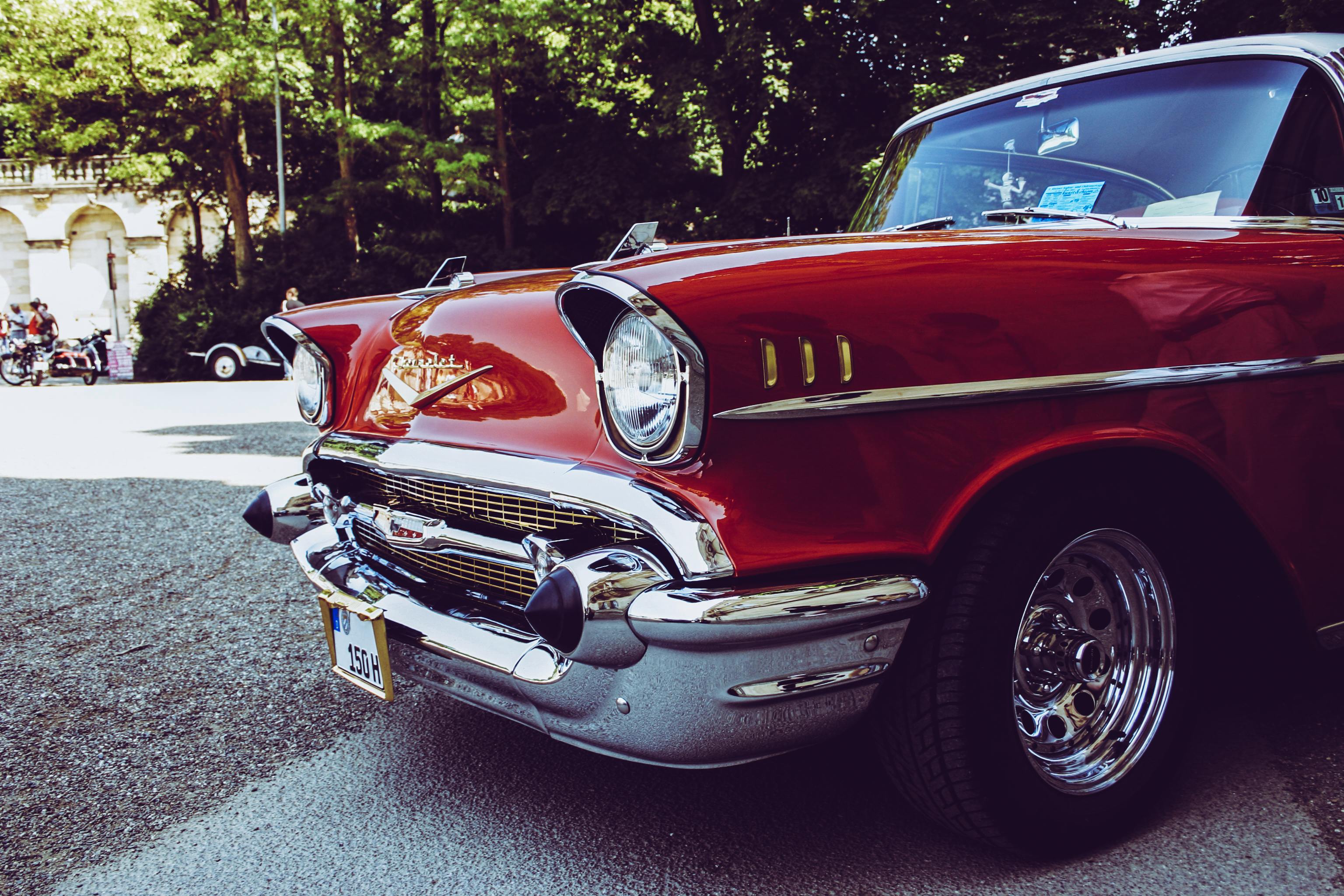
Each year the Madeira Classic Car Club (Clube de Automóveis Clássicos da
Madeira) holds its annual Tour of Madeira Classic Car Rally. This year it will
take place between the 24th and 25th of
June. The event is recognized by PAKF (Portuguese Automobile
& Karting Federation) and has become an annual sensation.
What is it?
Classic rallying is a type of road rally suitable for most standard classic cars, with no special
equipment needed (the equipment allowed depends on the particular rally). These
rallies are more about enjoyment than speed, and can be a good introduction to historic
motorsport (which
also include race meetings, classic endurance, and hillclimbing). A classic
road rally is not about speed; in fact, there are severe penalties for
finishing too early. The idea of a rally is to travel from a point to another
within a certain time (time controls), not too fast or too slow, trying to
match a speed average set by the organizers.
Classification?
Classic
rallies can be classified as regularity rallies, endurance rallies, and touring
rally.
In regularity
rallies, a series of intermediate time controls must be visited in the correct
order. At each control point, the team stops and has time recorded on a card.
At the end of the event, the competitor who has visited all these controls and
who has the fewest early or late penalties overall is the winner. Note that
with the introduction of electronics, control points can be replaced by sensors
which trigger the cars at their given time thanks to a transponder, enabling
much accurate penalties system.
Endurance
rallies are long-distance motor rallies for vintage, historic and classic cars.
Touring
rallying is all about enjoying countryside and the company of classic car
owners, which is the case of Madeira’s Tour of Madeira Classic Car Rally.
Classic
rallies try to relive some of the great events of the 1960s and 1970s when man
and machine were often alone for hours, even days, with little support. Cars
now have expendable parts and a gearbox can be changed in twenty minutes. On
the long tough rallies of yesteryear drivers had to drive 3000 km exclusively
up and down the French Alps, for example,
against the clock for most of the way, and look after the gearbox and every
other part of the car, since changing them was impossible.
As a rule participants
are given a road map, a straightforward ball and arrow system to show the route.
The map also provides a diagrammatic representation of the road junction.

No comments:
Post a Comment