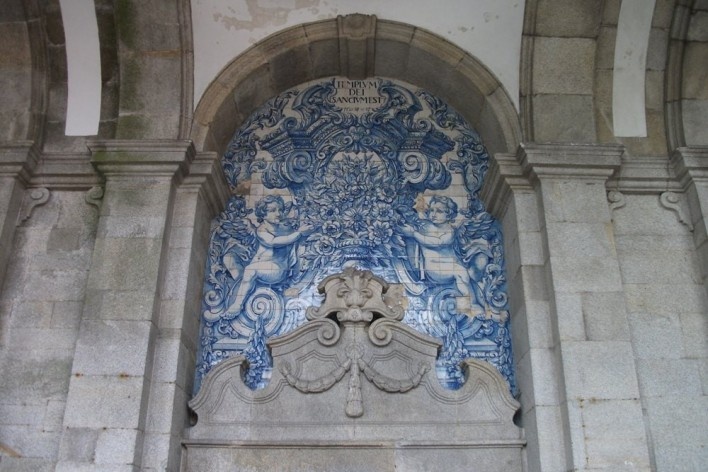
The blue azulejos are a classic feature of Portuguese architecture and these beautiful tile mosaics not only adorn buildings throughout the country but also protect them from wind and rain.
Portugal´s decorative wall tiles belong to a venerable design tradition that stretches back to the 13th century. These azulejos are named after the Arabic term al zulecha, meaning burnt clay. Lisbon’s earliest tile workers were, in fact, Mudejars, or Moors who had converted to Christianity and settled in Europe.
Few examples of their work can still be seen throughout Madeira, although the 16th century tiles decorating the turret of Funchal’s cathedral are an honourable exception. Santa Clara Convent also has some fine Mudejar tile decorations on the floor surrounding the high altar.
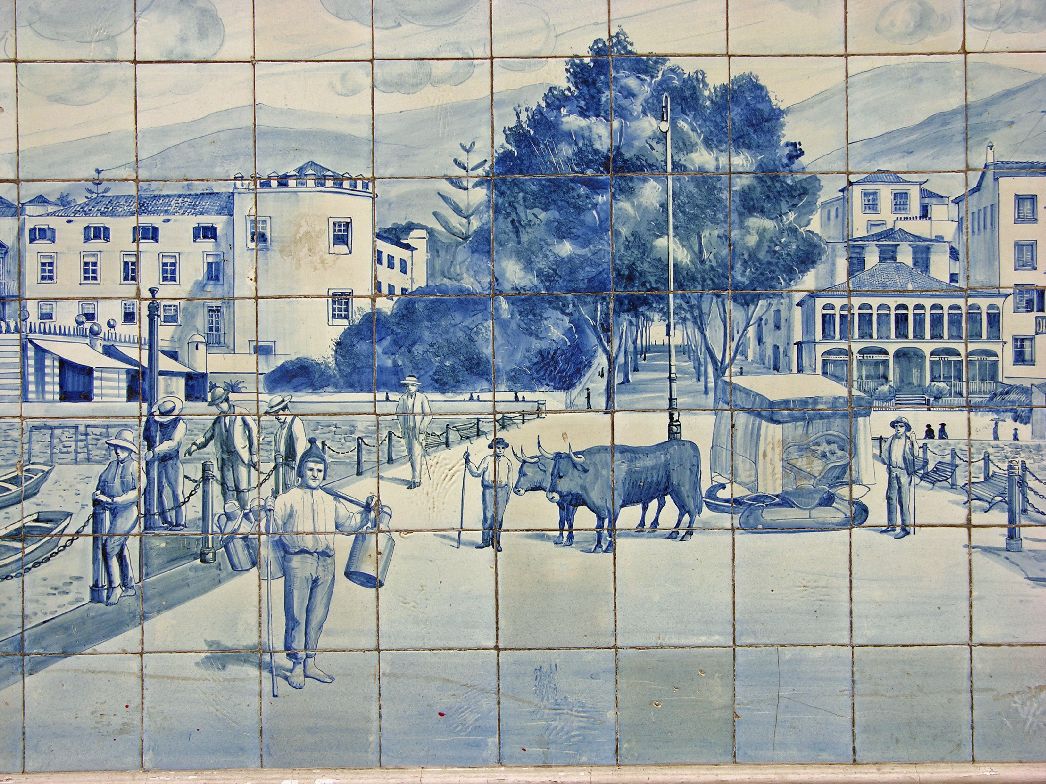
Later during the 16th century, the majolica technique from Italy was developed making azulejos much easier to produce; veritable ’tile carpets’ soon became fashionable (the transept of Funchal’s Igreja do Colegio is a good example). During the 17th century, tile making flowered on Madeira, and scores of outstanding examples are now displayed in the Casa Museu Frederico de Freitas, including Dutch influenced blue-and-white tiles, and the pictures depicting religious and secular stones.
Some fine examples of 18th century garden decor can be found dotted around the Monte Palace in the Tropical Gardens. Substantial tile panels stand out in gleaming contrast to the stark white facade of the 17th century parish church of Nossa Senhora da Piedade in Vila Baleira in Porto Santo.The fountain in the Machico valley dates from the 1800s, when mass production of tiles started in Madeira.
Good examples of quality modern work include the fountain in front of the Carlton Hotel, and the tiles on the terrace of Reid’s Palace Hotel.

No comments:
Post a Comment